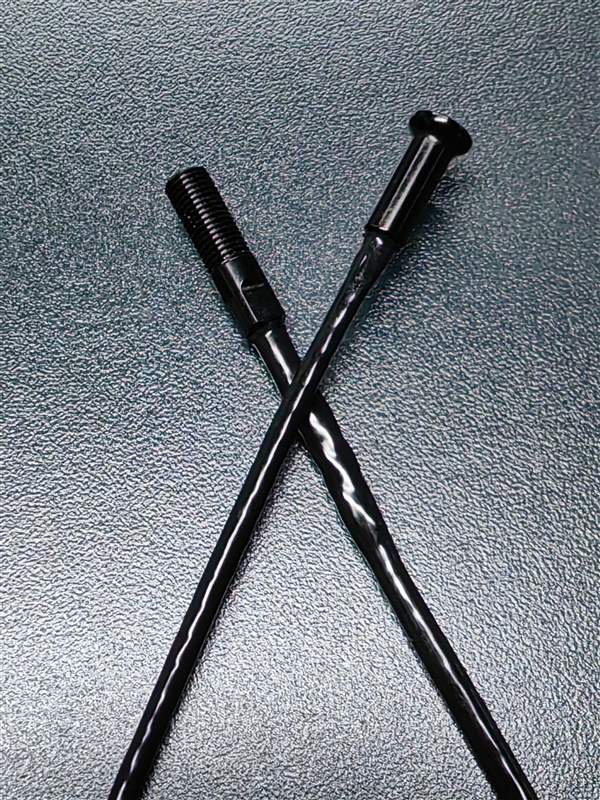
The four data blocks on the homepage are expanded here into item-by-item detail: ultimate tensile, 48-hour tension holding, biphasic braid stiffness, controlled specs and operating limits.
Every figure carries its source section, so you can go back to the exact paragraph in the whitepaper (or the build guide).
Destructive tensile testing on a dual-column machine, 120 kgf held for 48 hours, 180 kgf full inspection and >300 kgf sampling — 12 factory inspection items recorded one by one. We break them so that every remaining one can be predicted.
At low tension the braided geometry is soft, absorbing and filtering vibration; at high tension the fibres straighten and stiffness approaches carbon fibre. Compliant at cruise, rigid at sprint — with no switch to flip.
Low tension absorbs and filters vibration; the ride feels more planted.
Source: /en/whitepaper/ §1.5High tension delivers stiffness directly, with no lag.
Source: /en/whitepaper/ §1.5
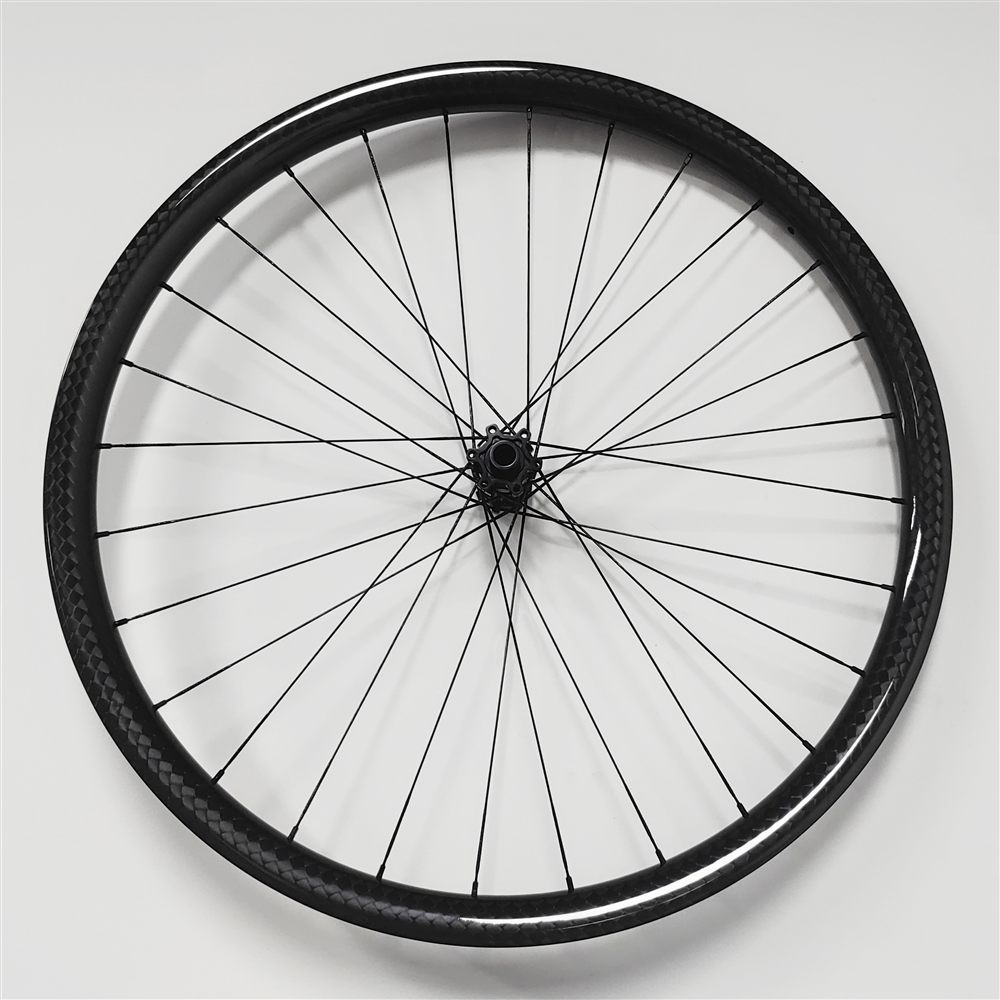
Every dimension leaves the factory within controlled tolerance. When replacing a steel spoke, convert the length as LPBO = Lsteel − 2 mm.
PBO's strength comes from highly oriented continuous chains. Any operation that breaks continuity makes the strength drop irreversibly — building it takes a whole production line, ruining it takes one action. The four rules below are hard constraints.
UV protection: the PTFE layer is fully UV-opaque; factory UV ageing retains ≥ 90% strength, outdoor service life > 20 years. Never strip the protective layer · Source: /en/whitepaper/ §5.6.4
The whitepaper carries the test conditions and derivations; the build guide carries the wheel-building parameters and compatibility limits; the wheelset catalog lists PBO replacement lengths by brand.
Whitepaper · Build Guide · Wheelset Catalog · Home · About · Contact · 中文
© 2026 Terragor · WowBlue Culture & Technology Co., Ltd.