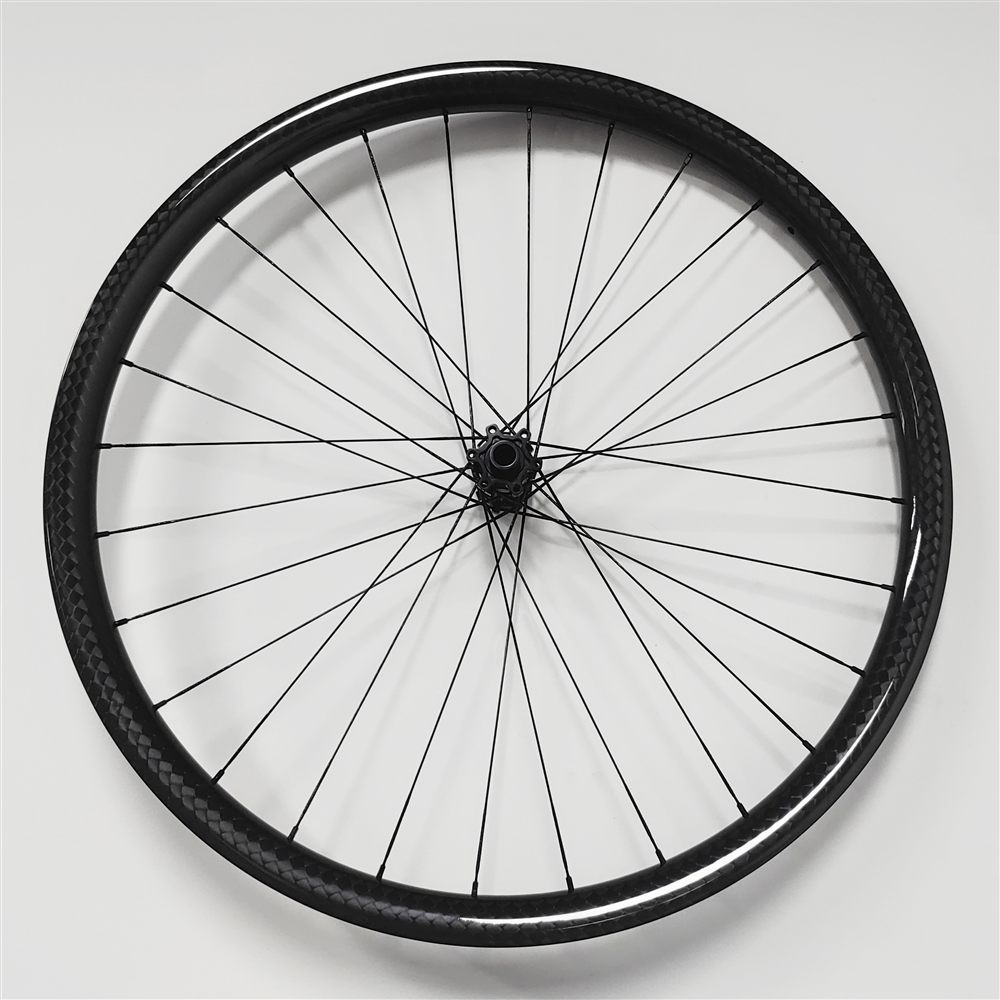
A spoke is not a spring — it is a pre-tensioned string. PBO's stress wave travels 2.27× faster than in steel, energy retention is 95%, and the mean ultimate tensile strength is 332.5 kg — every figure comes from measurement.
This is not a material swap; it is a change in how force is delivered.
The backbone of PBO (poly(p-phenylene benzobisoxazole)) is a rigid main chain of benzene rings alternating with benzobisoxazole rings — with almost no rotatable single bonds, the molecular chain is a nanoscale rebar by construction. Its strength and toughness are decided at the molecular level; what remains is to connect it to the wheel correctly.
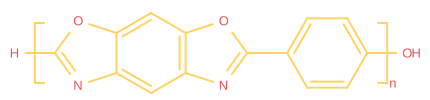
Benzene and oxazole rings are coplanar and conjugated; π-electron delocalisation raises bond energy and the segment cannot coil — rigidity is built into the structure.
During spinning the chains are fully extended and aligned along the axis in the liquid-crystal state, giving dense crystallinity and very few defects.
External force is carried by strong covalent bonds along the rigid backbone, with no flexible segment to buffer it — that is where the strength comes from.
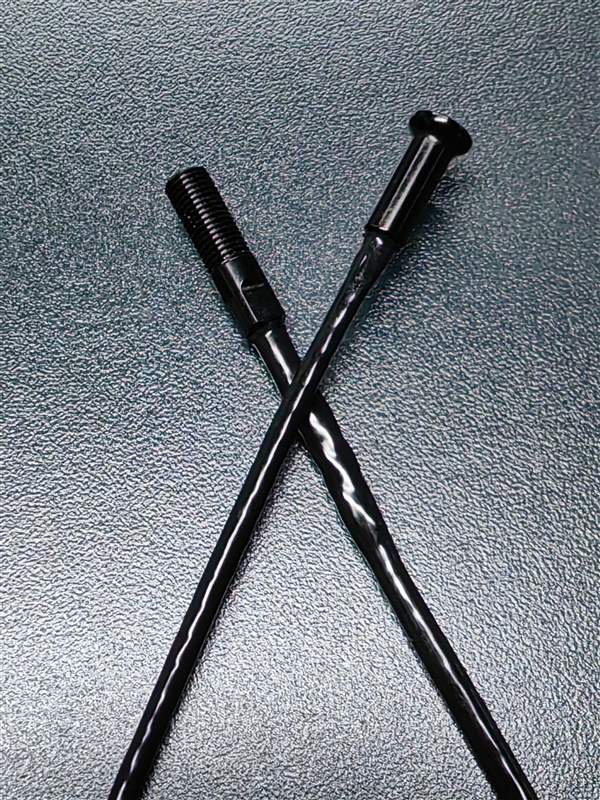
A spoke's effective stiffness = pre-tension + material properties. PBO's density is only 1/5.1 that of steel, yet its stress wave is 2.27× as fast — for the same pedal stroke, steel spreads the force over time while PBO delivers it at once.
Wave-speed ratio cPBO / csteel = 2.27×
About 430 m/s, so power reaches the ground sooner.
Loss factor only 0.0001, about one tenth of steel.
Pure fibre, no resin, no loss; carbon fibre retains only 5% of its energy because of the epoxy resin.
At low tension the braided geometry is soft, absorbing and filtering vibration; at high tension the fibres straighten and stiffness approaches carbon fibre. Compliant at cruise, rigid at sprint — with no switch to flip.
Low tension absorbs and filters vibration; the ride feels more planted.
High tension delivers stiffness directly, with no lag.
The stress wave travels back and forth at 430 m/s — 1.3 ms one way. Derived for a rear-drive 140 kgf / non-drive 91 kgf (0.65 ratio), 1:1 symmetric, small-flange 40 mm PCD configuration.
| Condition | Power | Drive-side peak | Notes |
|---|---|---|---|
| Cruise | 200–400 W | 155–175 kgf | Compliant and solid |
| Climb | 600–800 W | 195–235 kgf | Into the fibre-bearing zone |
| Critical | 1000–1200 W | 260–300 kgf | Non-drive side just goes slack; the margin stays clear |
| Limit | 1400–1600 W | 300–330 kgf | Below the 332.5 kg mean breaking load |
Every dimension leaves the factory within controlled tolerance. When replacing a steel spoke, convert the length as LPBO = Lsteel − 2 mm.
The points below are taken from laboratory records. The complete guide also contains the tension reference table and wheel-building parameters.
The PBO-specific tension table is mandatory; readout deviation must be ≤ 5%. Steel-spoke tables can deviate by more than 50% and must not be used.
Rear drive side 140–160 kgf, non-drive 91 kgf (0.65 ratio), deviation within ±5%, nipple torque 2.0–2.5 N·m.
Leave the wheel to rest for 24 hours after building; most stress relaxation is complete, then fine-tune lateral runout, roundness and tension uniformity.
Every spoke is measured for appearance, length, diameter and thread; each record is archived with the batch.
Destructive tensile testing on a dual-column machine, 120 kgf held for 48 hours, 180 kgf full inspection and >300 kgf sampling — 12 factory inspection items recorded one by one. We break them so that every remaining one can be predicted.
PBO's strength comes from highly oriented continuous chains. Any operation that breaks continuity makes the strength drop irreversibly — building it takes a whole production line, ruining it takes one action. The four rules below are hard constraints.
UV protection: the PTFE layer is fully UV-opaque; factory UV ageing retains ≥ 90% strength, outdoor service life > 20 years. Never strip the protective layer.
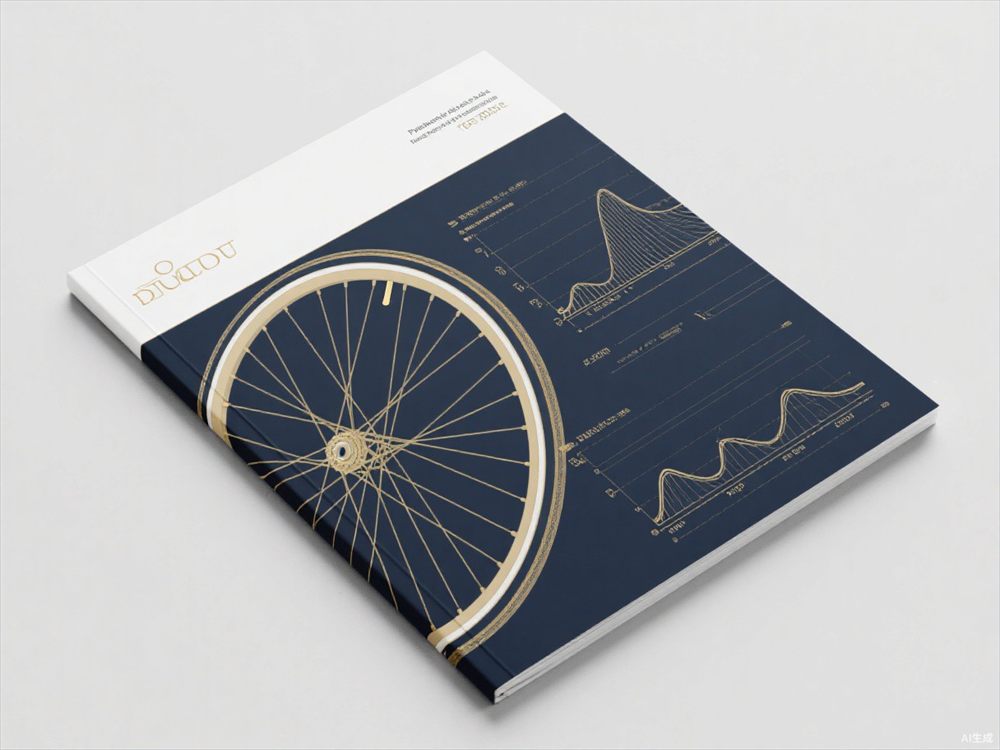
A complete record of the PBO braided-spoke development path: material selection, wave dynamics, geometry design, power-domain derivation and measured data. V2.1 · measured-data validation edition (V1.0 theoretical framework + VW-QM-A0-001/002/003 measured data).
The whitepaper sets out material mechanics, wave dynamics and measured data; the build guide sets out wheel-building parameters and inspection items.
Whitepaper · Build Guide · Wheelset Catalog · Measured Data · About · Contact · 中文
© 2026 Terragor · WowBlue Culture & Technology Co., Ltd.